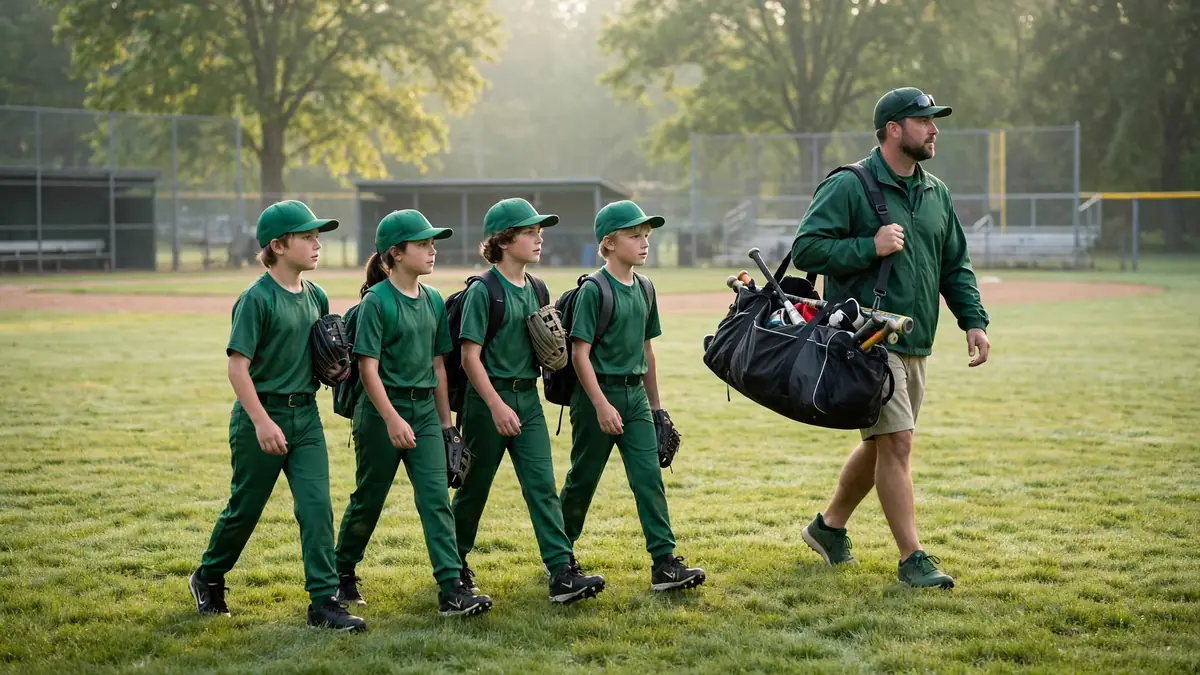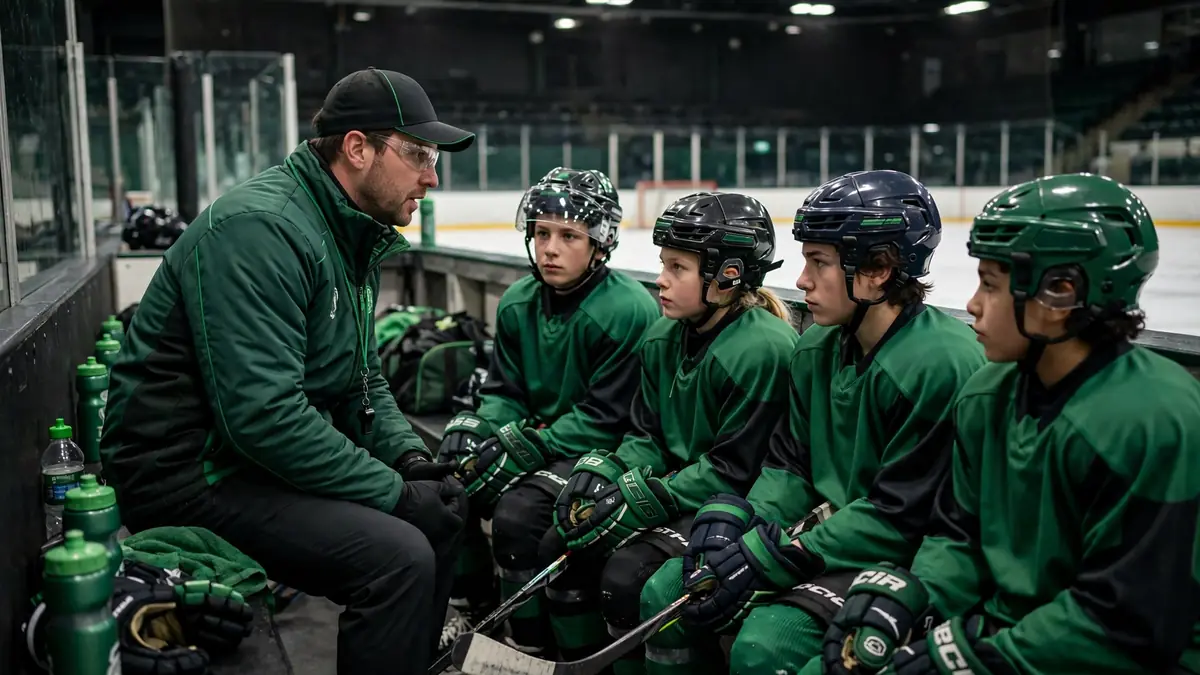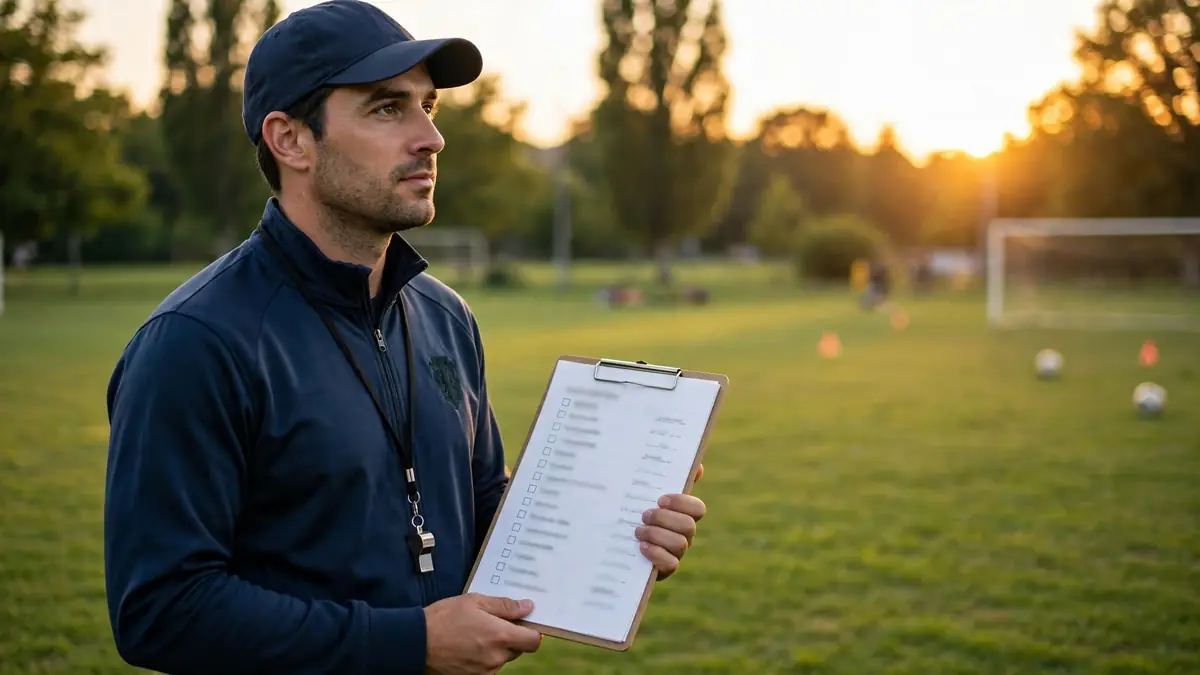
When a parent opens a team app and sees "Saturday, 10:30 a.m., Field 2," that single line looks effortless. Behind it, though, sits a whole system of decisions: which teams play each other, which fields are free, how long games last, when practices fit around school and work, and how everyone finds out when something changes. Understanding how sports team scheduling works makes you a calmer coach, a better-prepared parent, and a far more effective league volunteer. This guide walks through the moving parts step by step, from the first fixture list of the season to the last-minute rain delay.
The Building Blocks of Every Schedule
Every schedule, whether it covers a six-team recreational league or a single travel team, is built from the same basic ingredients. First there are the teams themselves, grouped into divisions by age, skill level, or both. Then there are the venues: fields, courts, rinks, or diamonds, each with its own availability windows, lighting, and travel distance. Finally there are the time slots, the days and hours when games and practices can realistically happen, shaped by daylight, facility bookings, school calendars, and the simple fact that most youth sports run on evenings and weekends.
A scheduler's real job is fitting these three ingredients together without collisions. Two teams cannot use the same field at the same time. A coach running two squads cannot be in two places at once. A family with siblings in different divisions will quietly struggle if both children play at the same hour every single week. Good scheduling is less about filling a grid and more about respecting these human constraints. If you are setting up a season for the first time, our guide to organizing youth sports team schedules walks through the setup process in practical detail.
How a Season Fixture List Gets Built
Most leagues build their game schedule around a round-robin format: every team plays every other team at least once, and in longer seasons, twice, once at home and once away. The scheduler starts with the number of teams in a division, which determines how many rounds are needed. An eight-team division needs seven rounds for a single round robin, because each round pairs every team exactly once. Add a second leg, playoffs, and a buffer week or two for weather, and the season calendar starts to take shape.
Balancing fairness
A fair fixture list spreads the inconvenient slots around. Nobody wants the 8:00 a.m. Saturday slot every week, just as nobody wants the longest drive for every away game. Schedulers rotate early starts, late finishes, and travel distances so the burden is shared. They also try to avoid long streaks of home or away games, keep rematches reasonably spaced, and leave breathing room around holidays and school breaks, when availability drops sharply.
Working around fixed constraints
Some constraints cannot move: a field permit that ends in October, a gym shared with a school basketball program, a coach who works Saturday mornings. Schedulers collect these blackout dates and fixed bookings first, then build the flexible fixtures around them. This is why the schedule for one division can look quite different from another, each division is solving a slightly different puzzle.
Practices Are a Separate Puzzle
Games are only half the calendar. Practices usually follow a fixed weekly rhythm, say, Tuesdays and Thursdays at 6:00 p.m., because repetition helps families plan. But practice slots compete for the same scarce fields and gyms as games, and they compete with every other team in the organization. Many clubs assign practice fields centrally, rotating teams through premium slots so one squad does not monopolize the best-lit field all season.
Practices also change more often than games. A coach short on numbers may combine two age groups for a session, move indoors during a storm, or add an extra practice before a tournament. Treating games and practices as two layers of one calendar, rather than two separate lists, is what keeps a team's week coherent. For a closer look at juggling both, see our article on managing games, practices and team events.
Who Does What: Roles in the Scheduling Process
In a typical youth league, three levels of people touch the schedule. The league or club scheduler builds the master fixture list and assigns venues. The coach confirms practice times, flags conflicts, and communicates with families. Parents and players complete the loop by marking availability and responding to event invitations, which tells the coach who is actually coming. When any one of these levels stops communicating, the whole system wobbles: a field sits empty because a cancellation never reached the league, or twelve players show up for a game that was moved the day before.
Larger organizations add more layers, division coordinators, field assigners, referee schedulers, but the principle stays the same. Each person owns one piece of information, and the schedule only works when those pieces stay in sync. Modern platforms exist largely to keep that sync automatic rather than dependent on long email chains; the features overview on this site shows how one such platform, TeamLinkt, brings registration, scheduling, and communication together in one place.
Availability, RSVPs, and Knowing Who Is Coming
A fixture list says when a game happens. It does not say whether your goalkeeper will be there. That is why mature scheduling systems include an availability layer: players (or their parents) mark themselves in or out for each event, and coaches plan lineups, carpools, and call-ups around real numbers instead of guesses. In TeamLinkt, for example, players can set availability and RSVP directly in the app, so the coach sees an accurate headcount before game day rather than counting heads in the parking lot.
This layer matters more than it first appears. Knowing on Wednesday that four players are away on Saturday lets a coach borrow players from another team, adjust the formation, or, in the worst case, request a reschedule while there is still time. Discovering it at kickoff helps nobody. Availability also feeds back into scheduling itself: teams that consistently lose players on Friday evenings are telling their league something useful about which slots actually work for families.
How Changes and Cancellations Flow
No schedule survives the season untouched. Rain closes fields, opponents drop out, referees fall ill, and a venue double-books a Saturday. The question is never whether changes will happen, but how quickly and reliably they reach everyone affected. In the paper-and-phone-tree era, a single postponement could take hours to cascade through forty families, and someone always missed the message. Our companion article on reducing missed team notifications explores that problem in depth.
Today, the standard approach is a single source of truth: one master schedule that, when edited, updates everywhere at once. TeamLinkt works this way, schedule changes sync to the website and the team app, and events can be pushed out as reminders by push notification and email. Families can also sync the schedule to their own calendars, so a moved game updates in the same place they track dentist appointments and school events. The technology is not magic; it simply removes the manual re-typing and re-sending where mistakes used to breed.
Paper, Spreadsheets, and Scheduling Software
Plenty of small leagues still run on spreadsheets, and for a handful of teams that can work. The cracks appear as soon as the league grows: version confusion ("which file is current?"), no automatic conflict checking, and no direct line to parents' phones. Dedicated scheduling tools add three things a spreadsheet cannot, automatic detection of double-booked fields and teams, instant distribution of changes, and an availability layer tied to each event. Whether a league uses TeamLinkt or another system, the underlying logic is identical to the manual process described above; the software just performs the checking and notifying at a speed and scale humans cannot match.
Beyond the League: Tournaments, Playoffs, and Special Events
Most schedules also have to absorb events that sit outside the regular fixture list. Tournaments compress many games into one or two days, often at a single venue, and they run on their own logic: group stages, short turnaround times, and knockout rounds whose participants are not known until results come in. A good tournament schedule builds in rest gaps between a team's games and keeps venues close together, because young players moving between distant sites lose both energy and playing time to travel.
Playoffs add a different wrinkle, the fixtures cannot be finalized until the regular season standings are known, so schedulers publish the dates and venues in advance and fill in the team names at the last moment. Special events such as photo days, skills assessments, and end-of-season celebrations also belong on the same calendar, because they compete for the same families' time. The principle running through all of it is the one this article began with: one coordinated system, where every event is visible in relation to every other, is what prevents the collisions that frustrate players and parents alike.
Conclusion
Sports team scheduling is the art of fitting teams, venues, and time slots together fairly, then keeping everyone informed as reality inevitably rearranges the plan. A good schedule balances fairness, respects fixed constraints, separates the rhythm of practices from the structure of fixtures, and builds in an availability layer so coaches know who is coming. Above all, it relies on one current, shared version of the truth, so a change made once reaches every family. Once you see the system behind that simple line, "Saturday, 10:30 a.m., Field 2", you will never look at a fixture list the same way again.